Harte and Fairley families’ ties across generations
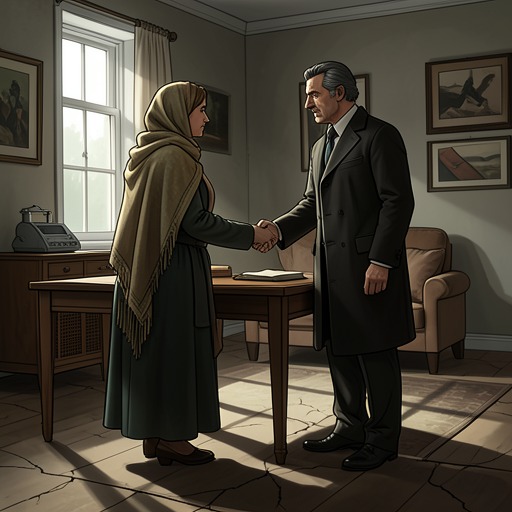
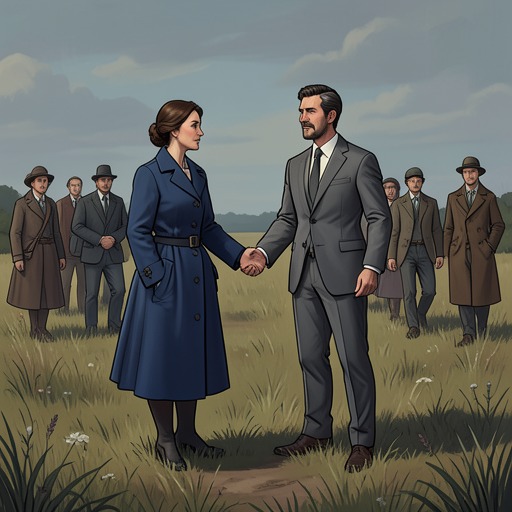
A Woman of SubstanceThe ties between the Harte and Fairley families are shaped by a repeated collision between love and inherited grievance. For nearly a century, Fairley men have loved Harte women, yet family circumstances and old injuries have repeatedly obstructed those relationships. Emma Harte’s decision to approve Paula and Jim Fairley’s marriage breaks that pattern: what had been a history of separation and pain may become a bond joining the families.
A Pattern of Love and Obstruction
The connection reaches back to Elizabeth Harte and Adam Fairley, whose love was thwarted. Their children inherited not a settled alliance but the consequences of that failure. Emma’s own relationship with Edwin Fairley became the second generation of thwarted love: Edwin rejected her, and the rejection endured as a defining wound in her life. To Emma, the Fairley name therefore carried personal pain as well as the weight of a family history that seemed to repeat itself.
That history is described as three generations of Fairley men falling in love with Harte women and being crossed in love, spanning almost a hundred years. Edwin, near the end of his life, entrusted Jim with both a message for Emma and a plea that she let the pattern end. His words framed their private history as part of a larger inheritance: the earlier generation’s thwarted love, Emma and Edwin’s own loss, and the chance for the next generation to choose a different outcome. The phrase “Doomed by circumstances of birth” captured the force that seemed to govern the earlier relationships, while Edwin’s request asked Emma not to pass that fate on.
Emma’s Grievance and Family Loyalties
The old conflict did not remain only a romance. It shaped Emma’s decisions about the Fairley family and her descendants. She later admitted that the Fairleys had brought pain into her life since she was fourteen. She had tried to keep her children away from their orbit, treating distance as protection. But this protective resolve also preserved the boundary between the families, allowing old bitterness to influence choices long after the original heartbreak.
Emma’s loyalties within her own family were themselves complicated. When Gaye Sloane informed her that Robin Harte and Kit Harte were plotting against her, Emma experienced the news as a betrayal by her sons. She also believed Edwina Harte had sided with Robin, recalling that Edwina had supported him during an earlier takeover bid. By contrast, she was certain Daisy would not join a conspiracy against the Harte holdings: Emma trusted Daisy’s love, loyalty, respect, and faith in her judgment. These internal divisions show that kinship did not automatically produce trust. The families’ story turns instead on choices about allegiance, and on whether loyalty will sustain or fracture a household.
The Third Generation’s Different Possibility
Paula’s relationship with Jim brings the inherited pattern into the present. Emma had initially opposed the match, in part because her old prejudice against the Fairleys still shaped her response. Yet she also encountered Jim on his own merits. When he applied for a position with the newspaper company, she judged him the strongest candidate despite her misgivings, and admitted that the idea of a Fairley working for her had its own satisfaction. Their employment connection did not make the young couple’s meeting inevitable: Paula was not involved in the publishing side of Harte Enterprises. It did, however, place Jim within Emma’s business world before their relationship forced her to reconsider the family boundary.
Emma eventually reversed her decision. She told Paula that it had been wrong to let an old woman’s pride and bitterness stand between her granddaughter and the future she wanted. Her change was not a denial of the past: she still acknowledged how deeply the Fairleys had hurt her. Rather, she chose not to make Paula bear the cost of that history. She even recognized that she had tried to protect her children from the Fairleys without considering that her grandchildren might find happiness with one of them. In granting her approval, Emma made a conscious distinction between remembering an injury and enforcing it on the next generation.
Edwin’s Legacy and Reconciliation
Jim’s account of Edwin’s last request gives the reconciliation a personal as well as a generational meaning. Edwin had been dead for three months when Jim told Emma what he had asked him to say. Along with the plea for her to let the young couple be happy, Edwin had asked Jim to beg forgiveness for what the Fairleys had done to her, and especially for his own repudiation of her in the rose garden. He confessed that he had never stopped loving her and that the rejection had cost him dearly. The family history thus arrives not as an abstract legend but as a late acknowledgment of responsibility from the person whose choice most directly wounded Emma.
Jim also brought Emma the Painted stone portrait of Elizabeth Harte, a keepsake Edwin had asked him to deliver. Emma welcomed the portrait because she had no photograph of her mother and said she would treasure it. The object linked the reconciliation to the earlier generation: the present couple’s future was accompanied by a tangible reminder of the older love that had not been fulfilled. When Emma accepted Edwin’s plea and recognized that the cycle had lasted too long, the family story shifted from repetition toward release.
Blackie O’Neill understood Emma’s approval as the end of the vendetta and the joining of the two families at last. Emma, imagining Fairley great-grandchildren, welcomed the prospect not as a victory over her history but as a future for Paula and Jim. Her blessing does not erase Elizabeth and Adam’s thwarted love or her own heartbreak with Edwin; it changes what those losses are allowed to dictate. The Harte–Fairley bond, once marked by separation and grievance, can now carry affection across the same family line that had long seemed to prevent it.